Call the Nautical Experts
1-800-682-0573 Mon - Fri 8-5 pm EST
Welcome aboard! GoNautical source of Ship models, Nautical decor, Beach decor, Nautical clocks, Ship wheels, Telescopes, Sailboat models, Tall ship models, Compasses, Ships in the bottle. You can easily shop for nautical gifts here.
 
SECTIONS
MODEL SHIPS

NAUTICAL DECOR
Categories
SOCIAL
Follow us on Twitter
See us on Pinterest
...or on Tumblr
Shop By Price
Shopping Cart
Your cart contains 0 items
Information
Top » Catalog » MODEL SHIPS » FAMOUS SHIPS » B0802 USS Constitution 38"
[B0802]
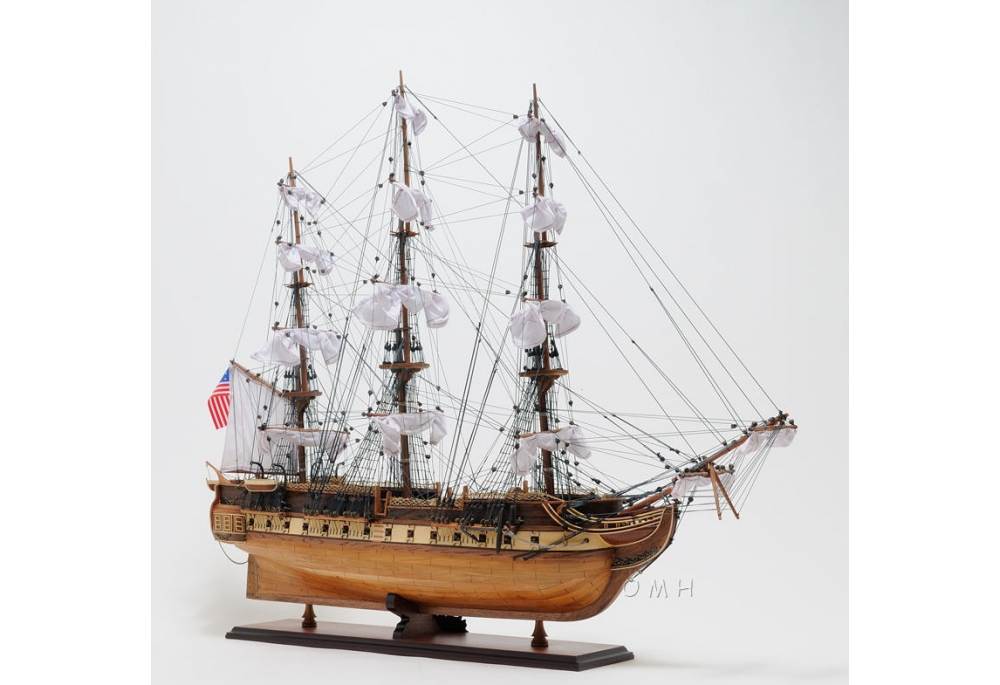
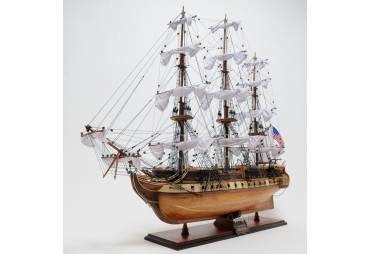
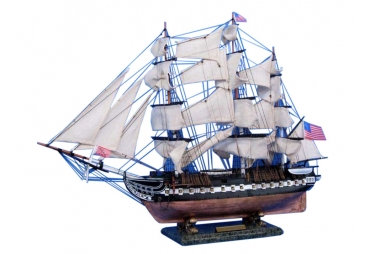
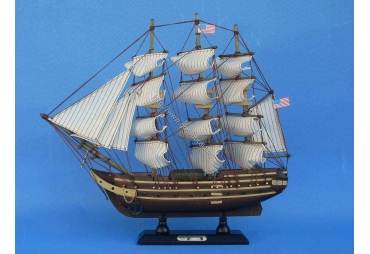
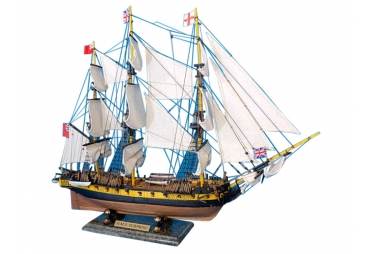
USS Constitution 38"
Description: Untitled document

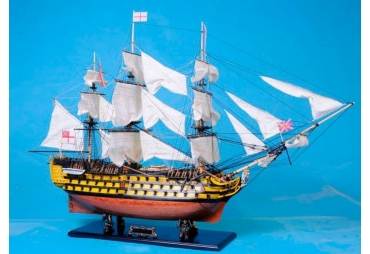
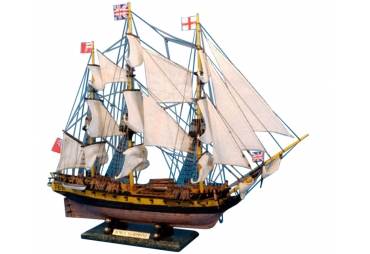
Features: USS Constitution 38"

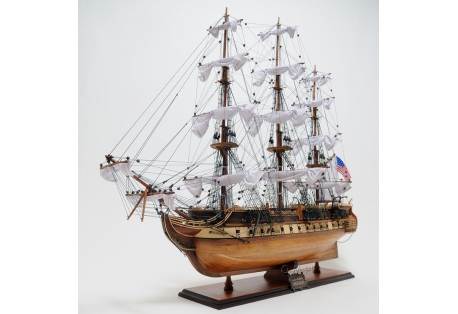
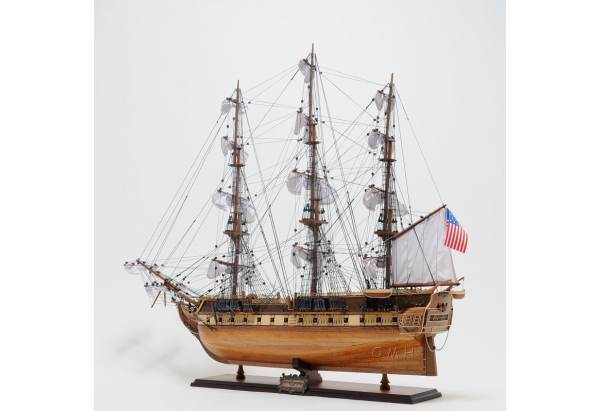
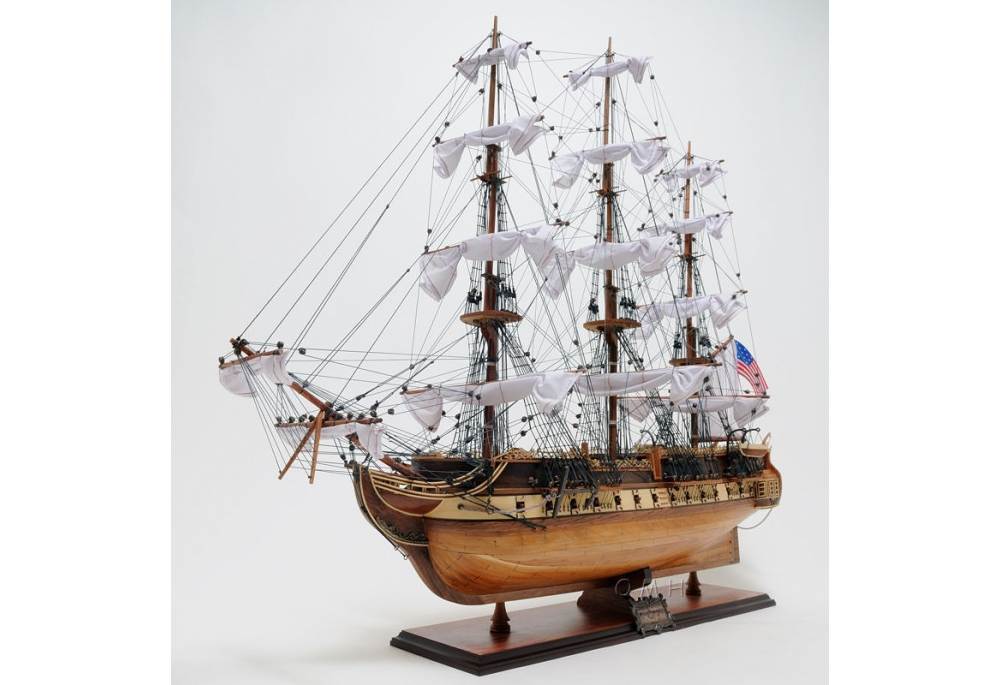
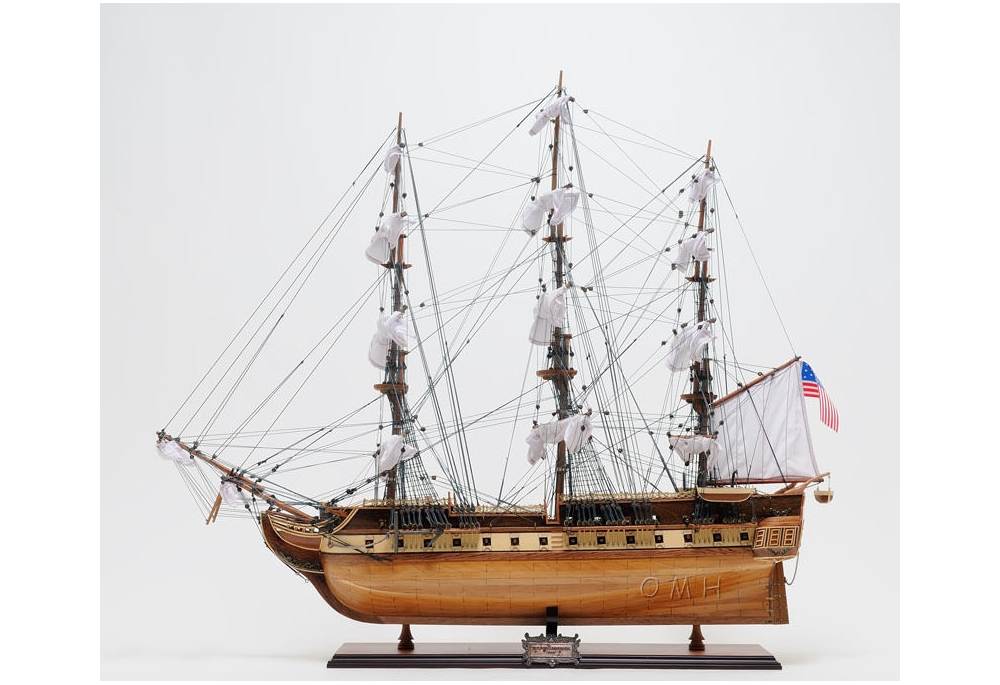
  • SOLD FULLY ASSEMBLED - THIS IS NOT A MODEL SHIP KIT
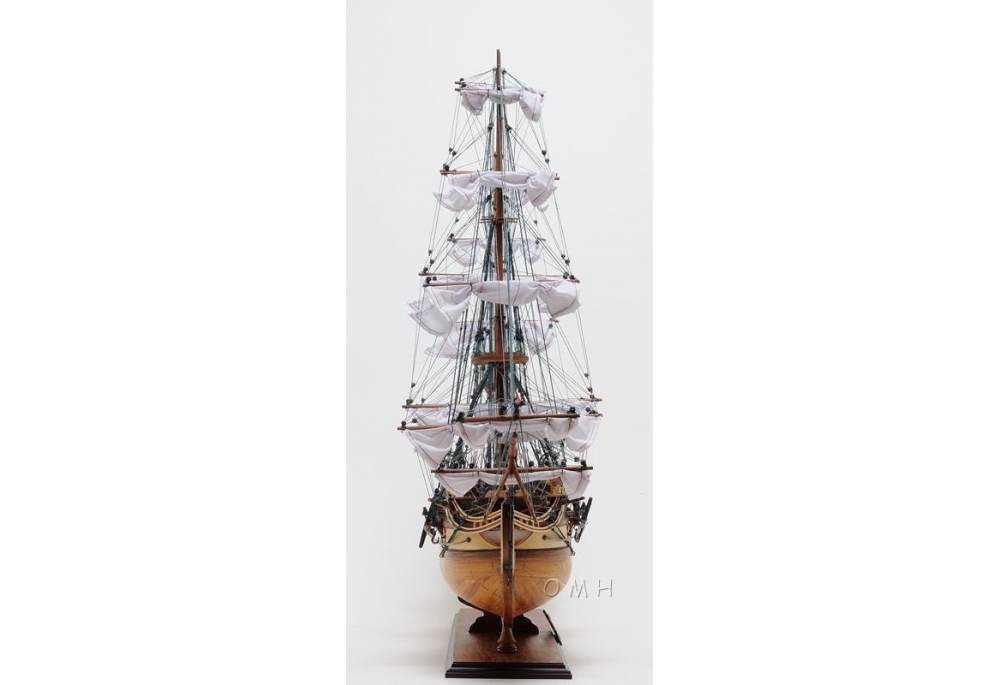
  • 38" long x 12" Wide x 28" High (1:64 scale)
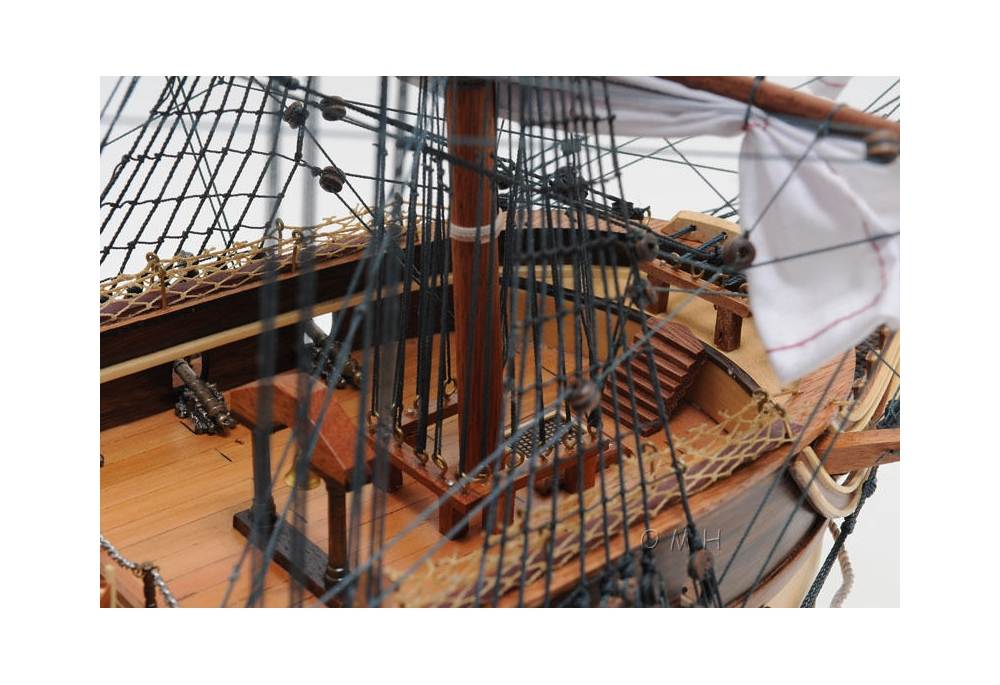
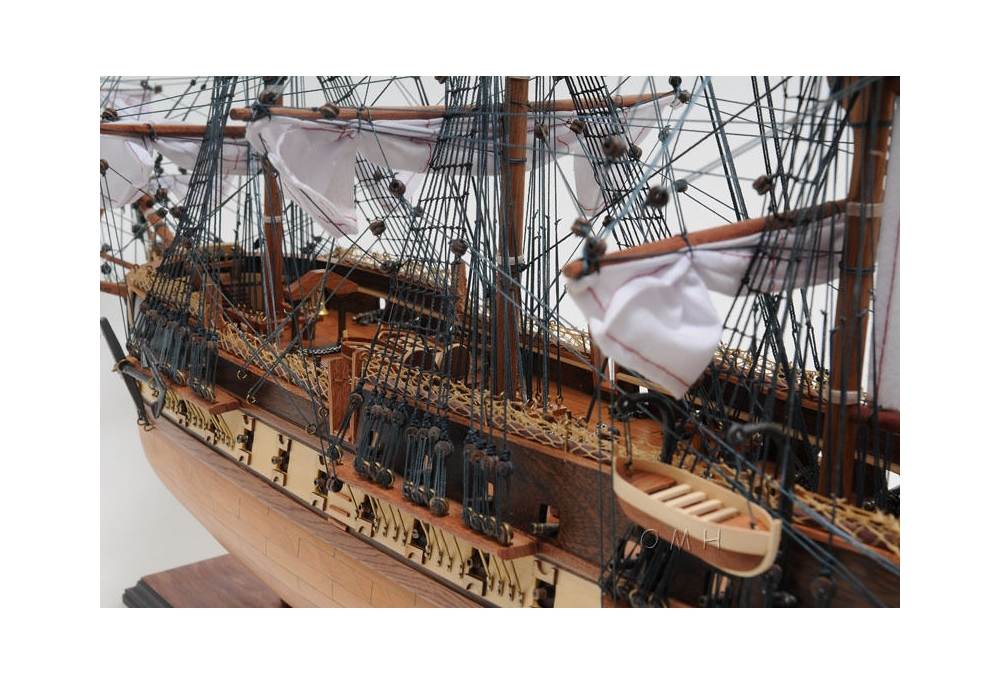
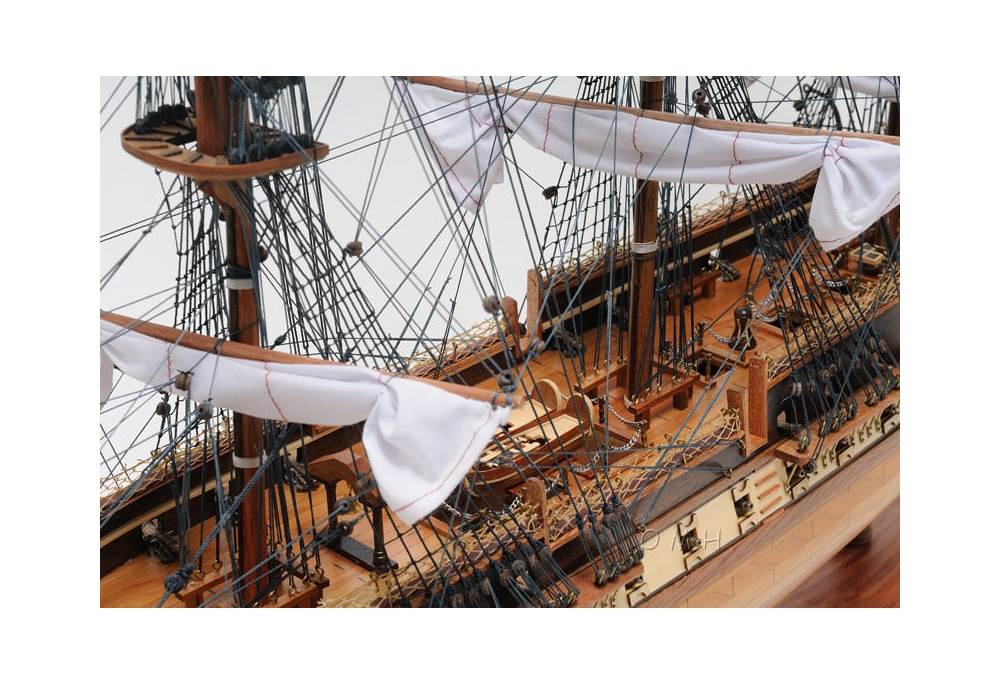
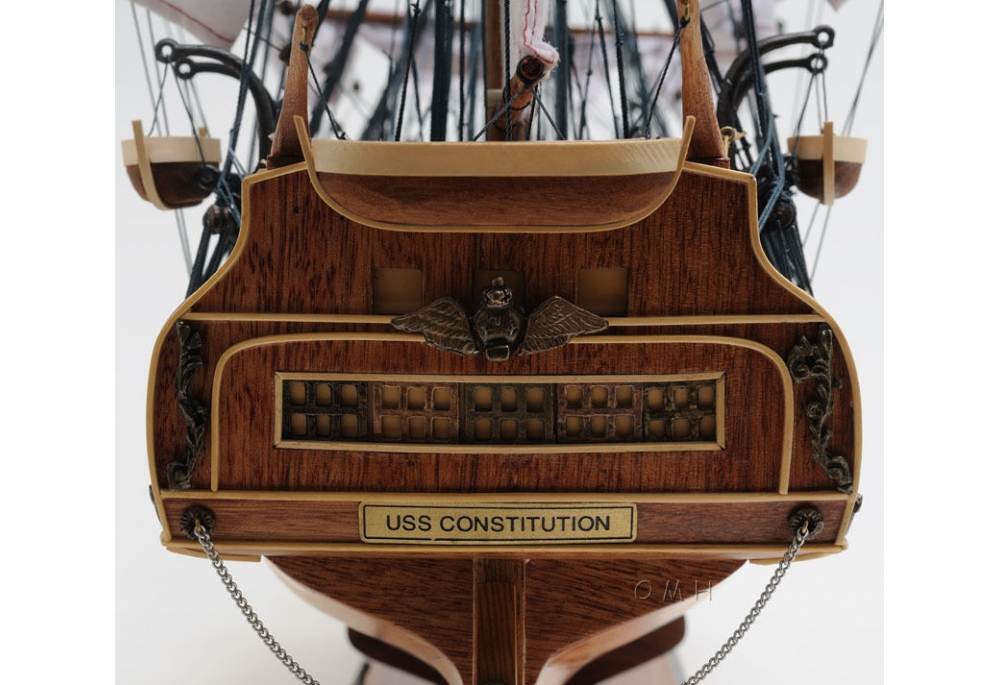
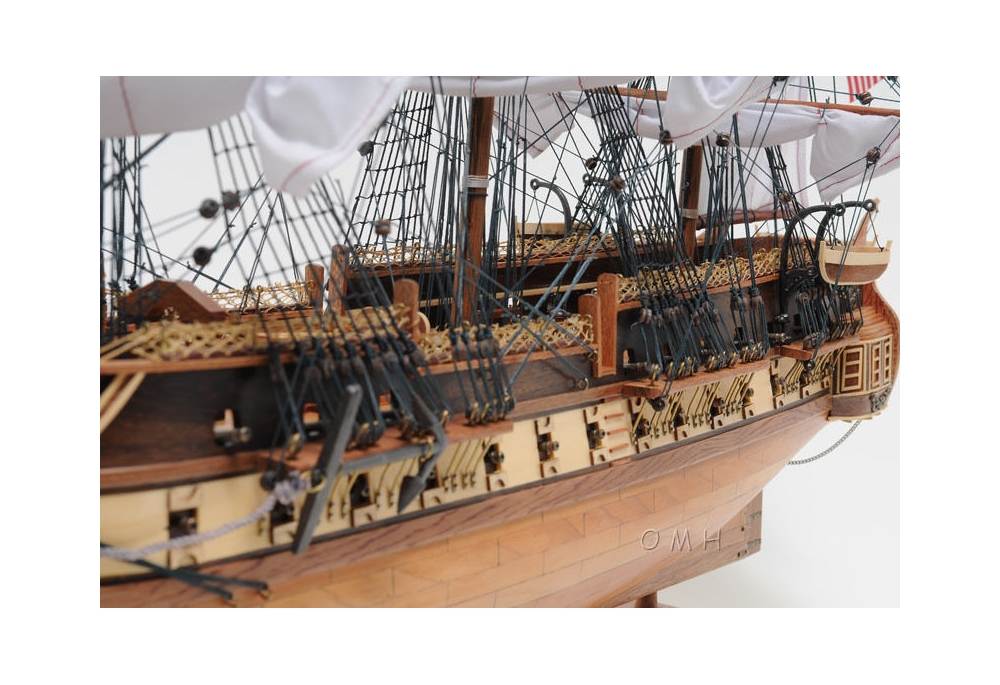
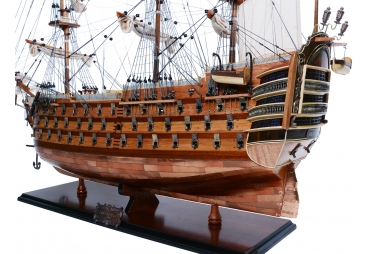
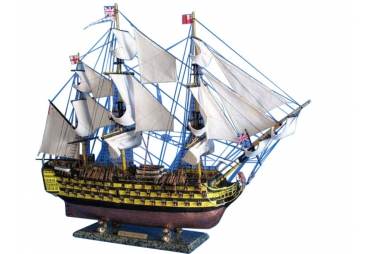
  • Amazing details: planked deck with nail holes, tied-down cannons, barells, buckets, cannon ball racks, rudder chains, handcrafted rosewood eagle on the stern, US shield on the bow and more.
  • Meticulously painted to the actual USS Constitution
  • 23 masterfully stitched, thick canvas sails that hold their shape and do not wrinkle
  • Metal anchors and turned brass cannons
  • Advanced rigging techniques with over 200 blocks/deadeyes
  • Perfectly taught rigging of various colors and thickness to ensure authenticity
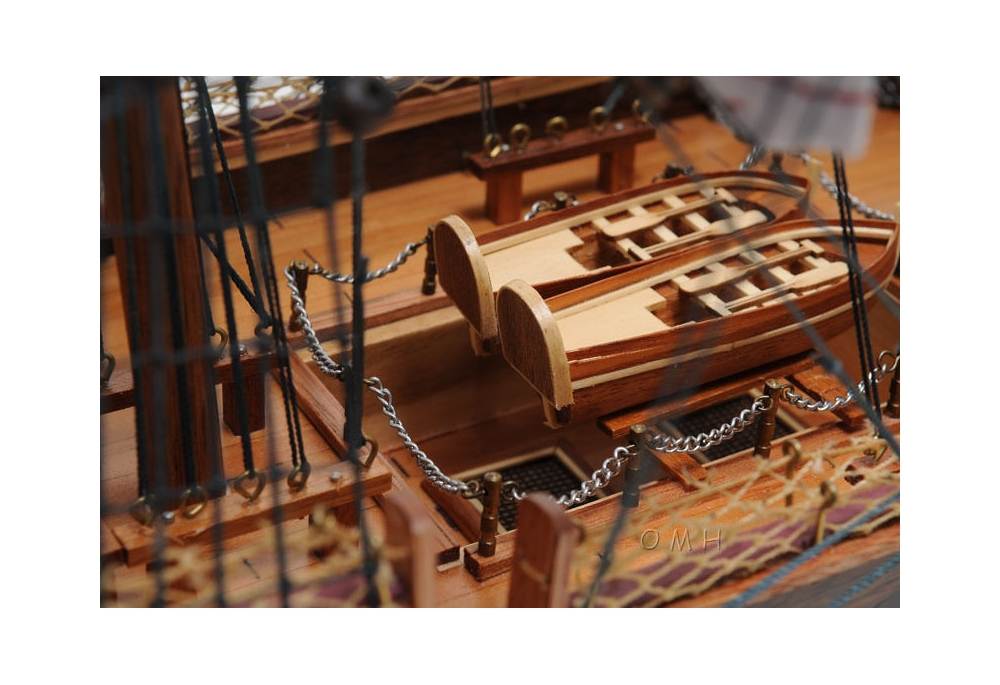
  • Authentic lifeboats - not flat bottomed
  • Requires hundreds of hours to build from scratch (not from a model kit) by our master artisans.
  • Built with rare, high quality woods such as cherry, walnut, oak, birch and maple.
  • The model rests perfectly on a large wooden base between four arched metal dolphins (marble base pictured)
  • To build this ship, extensive research was done using various sources such as museums, drawings, copies of original plans and photos of the actual ship.


Our price: $399.99


More Views:
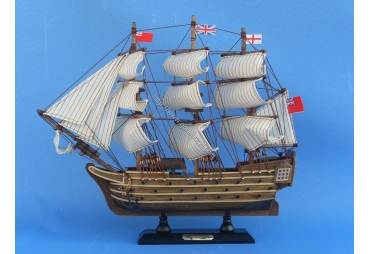
USS Constitution 38"
  USS Constitution 38"
Untitled document

1794

On March 27 President George Washington signs an ac that will help and provide the navy with armament. After receiving authorization, the Third Congress constructs six frigates and one of them in the U.S. Navy. Frigates are currently called “cruisers”. The immediate issues and Americas first concern is protecting the large American merchant fleet that keeps being attacked by the “Barbary pirates” of North African states of Morocco, Algiers, Tunis, and Tripoli. Mr. Joshua Humphreys designs the ships. He is a Quaker from Philadelphia and one of the most innovative naval architect of that time. Each ship is to be built as six different cities. One of these ships was to be named the USS Constitution and it was given to the shipyard of Edmund Hartt in Boston, Massachusetts.

1794-1797

The USS Constitution was built from 1794-1797. She was built to defend the young and flourishing American nation and she is almost as old as the document after which George Washington named her after. She, just as the document, proved herself to be a symbol of America’s courage, liberty, and strength.

Her design makes her powerful enough to outfight any other warship that is almost the same size. However, she was faster than larger opponents and could out sail her enemies. Her construction involved Capt. Samuel Nicholson, chief constructor Col. George Claghorne, and naval agent Gen. Henry Jackson. They initially received funding of $115, 000, but her final cost would be $302, 700. She was made of about approximately 2,000 trees that were obtained from Maine to Georgia, was fitted with copper fastenings that were provided by the famous Boston smithman, Paul Revere, and she was armed with cannons that were cast in Rhode Island. The USS Constitution was launched on October 21, 1797 but wasn’t put out onto sea until 1798. To this day, she is part of the United States Navy and that makes her the oldest commissioned warship in the world.

1797

The construction of the USS Constitution was almost halted in 1796 because the U.S. signed a peace treaty with Algiers, she was still launched on October 21, 1797 and christened by Captain James Sever who used a bottle of Madeira wine. The first attempt to launch her was a month earlier. She became stuck after moving only 27 feet. The second attempt was two days later where she moved another 31 feet before she got stuck again. The third and final attempt was successful because the movers made the launching ways steeper. Those watching the launching were warned that moving such a large ship into the water might cause a large wave but that never happened.

1798

On May 5, 1798, Secretary of War William McHenry orders that the USS Constitution is to be made ready for sailing into the sea.

On July 22, 1798, the USS Constitution is on her was and out to sea for the first time. She was under the command of Captain Samuel Nicholson.

1798-1801

During these years, she cruises the West Indies and protects the U.S. merchant shipping from French privateers during the “Quasi-War” with France. She was not engaged in battle with any ships. However, she did capture and recapture a few privateers and victims of privateers.

1802-1803

The USS Constitution is laid up in Boston, Massachusetts.

1803-1805

She is sent to the Mediterranean Sea as a flagship of the third Mediterranean squadron by President Thomas Jefferson. It was her mission to try and attempt to force the Barbary pirates from their policies of violence against the U.S. merchant shipping. Commander Edward Preble was in command and the Constitution and other ships of the squadron mounted five attacks on Tripoli. On June 3, 1805 a peace treaty is signed with Tripoli onboard the USS Constitution. Later on August 14, another treaty is signed with Tunis. Both treaties were signed inside the captains cabin aboard the Constitution.

1806-18011

Service in the Mediterranean ended and the USS Constitution returns to Boston on October 1807. She spends the years of 1807-1811 being inactive and then undergoes a partial overhaul around New York.

1812-1815

The War of 1812 goes into effect against Great Britain.

On August 19, 1812, the Constitution has her historic fight with the HMS Guerriere, about 600 miles east of Nova Scotia. The two ships spent about an hour inconclusively maneuvering and shooting at each other and eventually settled to having a short-range shoot-off. After about twenty minutes, the Guerriere loses her mizzenmast and a little bit later she loses her remaining masts. There is a legend that during the battle, a British shot bounced right off the US Constitution and someone screamed, “Huzzah! Her sides are made of iron!” That is where she got her nickname “Old Ironsides”. At the end of the battle, America had 14 casualties and Britain had 79. The Guerriere was so badly damaged that the British had to sink her down after the survivors were taken onboard the Constitution. Until this victory, America had been losing many battles and this win was very motivating to the nation. As a reward, Congress awarded Captain Isaac Hull a special gold metal, gave his officers silver medals, and the crew received $50,000.

The Constitution began a battle with the HMS Java on December 29, 1812 about 30 miles off the coast of Brazil. She was under the command of Commodore William Bainbridge. He was wounded twice and the ship lost her steering wheel from a gunshot. However, Bainbridge spent 3 hours maneuvering and fighting without a steering wheel. After those 3 hours, the Java had no masts left standing and her captain was dead. This battle had 34 casualties on the American side and 130 on the British side. The Java was badly damaged and was sunk just like the Guerriere. However, before he sunk her, Bainbridge took her wheel and replaced the one that was shot away on the Constitution.

The Constitution returned to Boston at the end of February of 1813. There was great rejoice over the victory over Java. Commodore Bainbridge and his crew received medals and money because this was the second triumph over the Royal Navy. From January to April of 1814, under the command of Captain Charles Stewart, the Constitution runs the Boston blockade. She captures the H.M. Schooner Pictou and a few other small vessels during the cruise to the Leeward Island and Windward.

On April 1814, she escaped to Marblehead, Massachusetts after being chased by two British fleets. She later returned to Boston to receive repairs. She spent the next eight months in Boston being blockaded. In December, she took the advantage of bad weather and bad visibility and Captain Stewart slipped right past the enemy and out to sea.

On February 20, 1815, Stewart had the Constitution about 180 miles away from Madeira when he meet the British HMS Cyane (24 guns) and HMS Levant (18 guns). The two against one battle began as the sun was setting. Stewart used his superb sail handling and quickly closed in on the Cyane and seriously damaged her masts and rigging. After that, he blasted the Levant so hard that she was put out of action for a while and that was when Stewart once again closed in on the Cyane and made her surrender. After the Cyane was captured, Stewart returned to the Levant. She surrendered after countless shootings. There were 18 American casualties and a total of 80 British casualties. Stewart wanted to take both the captures home, but he ran into a British squadron that took back the Levant. The Constitution and the Cyane returned to New York on May 15, 1815. Stewart learned that the war was now over. The HMS Cyane was bought by the U.S. Navy and became the USS Cyane. Stewart received a gold medal from Congress and his crew received a prize reward. The Constitution was the only ship that had all the captains that commanded her in the War of 1812 rewarded by the Congress. The Constitutions wartime career was now over.

1816-1821

The Constitution was put away into the Boston Navy Yard and preserved.

1821-1828

The Constitution served in the Mediterranean Squadron for a few years as the flagship. She was under the command of Captain Jacob Jones and Commodore Thomas Macdonough. During these years, she was visited by Lord Byron, a very famous poet. In 1824, she returned once to the U.S. to be refit and change her crews.

1828-1833

Old Ironsides” spends these years being paid up in Boston. The Navy requests that the Navy Yard conducts surveys on all ships to determine how much work needs to be done to bring the ships back out to sea. This reaches a local newspaper, which misreports and says that the Navy wants to take apart the Constitution for scraps. A poem is written and published by Oliver Wendell Holmes as a response to the surveyors report. As a response to the poem and public outcry, the Navy orders that the Constitution be refurbished.

1833-1834

The USS Constitution enters the new and huge Drydock No.1 as the first ship at the Boston Navy Yard. The dock was itself a technological marvel of that time. This Drydock will later be known as the one to hold “Old Ironsides” within its walls during 1992, 1995.

In 1834, the Constitution becomes caught in a political controversy concerning the installation of a new statue figurehead that will depict Andrew Jackson; the new president. Her original figurehead was of the Greek God Hercules and was lost in a collision during the Barbary Wars. It was replaced by a simple “billet head” decoration. At that time, President Jackson was very unpopular in Boston and the controversy gets so bad that the commandant of the Boston Navy Yard has his life threatened if he places the Jackson figurehead on the ship. A merchant skipper was able to get past guards and sneak onto the ship and cut the head off the figurehead. He returned the head to the Secretary of the Navy and it was repaired and placed back on the Constitution’s bow for many years.

1835-1838

The USS Constitution serves once again as a flagship of the Mediterranean Squadron. This time she was under the command of Commodore Jesse D. Elliot.

1839-1843

The Constitution serves as a flagship of the Pacific Squadron and is under the command of Commodore Alexander Claxton between 1839 and 1841. Between 1842 and 1843 she serves in the “Home Squadron” and is mostly inactive in Norfolk.

1844-1852

From 1844 to 1846, the Constitution circumnavigates the world under the command of Captain John “Mad Jack” Percival. She sailed 52, 370 miles in 496 days. She was visited by Pope Pius IX at Gaeta, Italy in 1849 while she was operating in the Mediterranean. He was the first Pontiff to step foot aboard U.S. territory. From 1851 to 1853 the Constitution was laid up at New York.

1853-1860

The Constitution sails as the flagship of the African Squadron. Her job was to patrol the West African coast and looking for slave traders. During this assignment she sails 42, 166 miles in 430 days at sea. From 1855 to 1860, her days of operating as a warship are over and she is placed up at the Navy Yard in Portsmouth, NH and is converted into a training ship. On August 1, 1860, the Constitution begins her ten year journey as a school ship at the U.S Naval Academy in Annapolis, MD.

1861

On April 21, 1861, the Constitution receives threats against her safety upon the outbreak of the United States Civil War. She is prepared to be moved more North and volunteers from Massachusetts are brought aboard the Constitution to keep watch and move her. However, as they try to leave, she runs aground. She was towed by the steamer BOSTON into deeper water and on April 26 she began her three day journey to New York. She was towed by the steam gunboat R.R. Cuyler.

1861-1865

During these years, she was moved to Newport, RI and that is where the Naval Academy relocates. She once again takes up her duties as a training ship as the Civil War goes on. In 1865, she moved back to Annapolis with the Naval Academy because the war had ended and she was no longer under threat. During the voyage, she was faster than the ship tugging her and so she sailed the rest of the way herself. During one point, she sailed as fast as nine knots, despite her old age. She arrived at Hampton Road ten hours before the steam tug.

1871-1878

In 1871, it was decided that that Constitution really needs repairs and is moved to the Philadelphia Navy Yard. She was supposed to initially be restored for an exhibition in 1876, the nation’s centennial. However, there were work delays and that prohibited this from occurring and the restoration was incomplete and done badly. In 1878, the Constitution serves as a training ship in the Philadelphia Navy Yard.

1878-1879

These years were the last years that the Constitution cruised in foreign waters. She was carrying the American exhibit for the world-wide Paris Exposition and was docking in Le Havre, France. She stayed in La Havre for nine months while waiting for the exhibits to be sailed back to the United States. On January 16, 1879, she ran aground beneath the White Cliffs of Dover, England while coming back from France. Eventually, she was pulled out by a British tug boat. On May 24, 1879, she arrived in New York.

1879-1881

During these two years, she sailed the Atlantic as a training ship for naval apprentices. She went to various points between Nova Scotia and the West Indies. This was her last mission and role as an active Navy unit.

1882-1900

The Constitution was laid up in New Hampshire at the Portsmouth Navy Yard and served as a receiving ship for new Navy recruits. There was a barn-like barracks structure built on the top of her hull. On September 21, 1897, she is moved to the Boston Navy Yard right before her 100th birthday. This was based on the efforts of Massachusetts Congressman John F. Fitzgerald who was the grandfather of President John F. Kennedy. From 1897-1900 “Old Ironsides” is on an exhibition at the U.S. Navy Yard in Boston. On February 14, 1900, Congress authorized repairs to restore the Constitution’s rigging and hull to the same condition that they have been when she was an active warship. However, there was not enough funding ($100,000 was needed) until 1906.

1907

The Constitution undergoes limited repairs that include the removal of the barracks-like structure that was built on the main deck and also replacing much of the spars, rigging, masts, and other woodwork. She also received some replica cannon while being prepared to be opened to the public for viewing.

1916

The Constitution was leaking up to twenty five inches of water per week while being at dock. This was a clear indication that her hull was badly damaged.

1924

The Constitution need daily pumping to stay afloat and not sink and experts say that it will cost about $400,000 to do essential repairs and restore her.

1925-1927

Secretary of the Navy Curtis Wilbur initiates a national, voluntary campaign to restorations funds. Many patriotic organizations and schoolchildren contributed almost $250,000. The children donated $148,000 in mostly pennies! The U.S Marine, Navy, and Coast Guard only donated $31,000. On June 16, 1927 the Constitution is once again docked for a very extensive reconstruction in Boston’s Drydock No.1.

1927-1930

During the restoration, a lot of decaying wood is replaced and the interior of the hull is given a lot of extra support. She was restored to look almost the same as she did in the 1850’s. There were new replica guns installed and these were far more accurate copies than the ones done in 1907. On March 15, 1930, she is floated out to Drydock and her repairs are almost done. The total cost of the restoration was $987, 000.

1931-1934

On July 2, 1931, the Constitution finally leaves Boston for the first time in over thirty years. The trip was for a goodwill tour of ports on the coast of New England. She was such a popular hit that after this trip she went on another tour that included all coastal states. She was under command of Commander Louis J. Gulliver during these years and traveled 22,000 miles and visited 90 ports. She welcomed more than 4.6 million visitors. Over two of those 4.6 million were in just California. She was towed by the minesweeper USS Grebe and sometimes the submarine USS Bushnell. On May 7, 1934, she returned to Boston and remained there until today. She represents the proud American naval heritage and all the people who have fought to preserve America’s freedom.


1954

President Eisenhower passes a law that states “The Secretary of the Navy is authorized to repair, equip, and restore United States Ship CONSTITUTION, as far as may be practicable, to her original appearance, but not for active service, and thereafter to maintain United States Ship CONSTITUTION at Boston, Massachusetts."

1972-1975

She undergoes another restoration right before the nation’s bicentennial in 1976. The Boston Navy Yard officially closed as a working naval station in 1974 and became part of the Boston National Historic Parl.

1976

On July 11, 1976, the Constitution is visited by Queen Elizabeth II of Great Britain and Admiral of the Fleet the Prince Philip, Royal Navy,

1992

She is once again docked in Drydock No.1 to undergo another major restoration. New discovered documentation allows her to reassume her appearance circa 1812.

1995-1998

The Constitution leaves the Drydock on September 26, 1995 and is in the best shape she has been in over 180 years. On July 21, 1997, she sails on her own power and is not towed by anything. This has not happened in 116 years. Six of the sails were used. On July 21-23, 1998, Naval vessels came to Boston to honor the USS Constitution. She receives a formal blessing and has a wreath placed on the grave of the first captain, Samuel Nicholson, at the Old North Church.

2000

On July 11, 200, the Constitution leads a “Parade of Sails” in company of over 120 tall ships into the Boston Harbor as part of the “Sail Boston 2000” celebration. This year, the ship and the USS Constitution Museum launched a six-year educational outreach program that was titled “Old Ironsides Across the Nation”. The goal was to bring the history of the USS Constitution to citizens throughout the nation.


Reviews